


New Towns
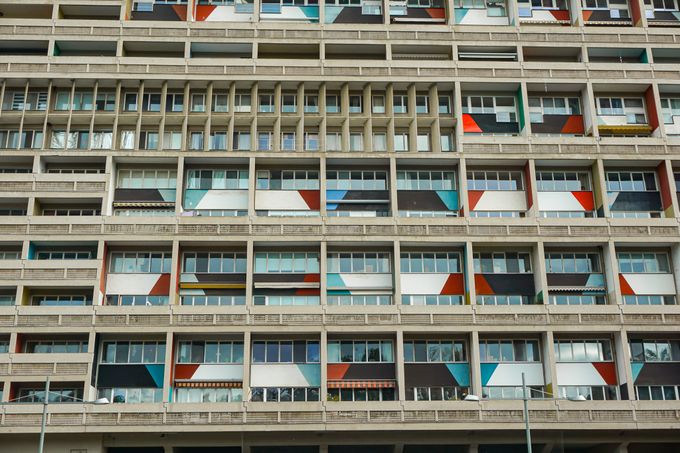
In the beginning, there was a space where they planned a place.
Their vision was an urban utopia with quality housing, green space and clean air. Everything that cities of that time did not have.
They planned it ab initio, from the beginning.
Many new towns of this kind have been built across Europe and beyond.
What happened to all those new towns, to all those ambitious plans of the past?
Ab Initio – an urban utopia is a research project on these new towns - towns built from scratch in 20th century Europe.
It used to be part of the official programme of Nova Gorica European Capital of Culture 2025.
Nova Gorica, Slovenia, is the first new town that has been awarded this prestigious title.
Every new town is a town without a long history, a town without traditions, without legends and stories that take shape through generations of people inhabiting the same place. It also lacks prominent urban families and characteristic crafts or dishes that usually help form the identity of older cities. For this reason, a new town initially always appears somewhat foreign within its surroundings. Almost all new towns therefore share a similar crisis of identity, as they were forced to invent themselves from the beginning.
Cities emerge either through the gradual growth of smaller settlements into larger centres or are planned as complete entities from the outset. During the Renaissance, the development of planned cities introduced the principles of perspective and order, marking the beginning of the modern idea of urbanism, that is, centralised urban planning. Many new towns were designed as military outposts (e.g. Aquileia, Palmanova, Karlovac), as ports, or as mining towns near deposits of valuable resources (Velenje, Raša). In the past century, however, many towns were built primarily for industrial purposes—most often steel production (Magnitogorsk, Nowa Huta, Eisenhüttenstadt), but also chemical industries (Halle-Neustadt, Torviscosa near Nova Gorica) and automobile manufacturing (Wolfsburg, built for the first Volkswagen factory).
A special chapter in the history of new towns is represented by the Italian Fascist regime, which built new towns in areas that became suitable for settlement only after land reclamation and drainage works. These new settlements literally became pioneer colonies on newly conquered territories and new centres of rural life (e.g. Latina south of Rome).
After the Second World War, many new towns were also created in order to relieve the pressure on large capitals and other urban centres. They first emerged around London, later around Paris (today’s notorious banlieues), and subsequently around Berlin. In the Netherlands today, approximately two out of the country’s seventeen million inhabitants live in planned towns.
THE ATHENS CHARTER
Modernist urban planning differs from earlier forms in that it takes all inhabitants into consideration. The Industrial Revolution triggered massive migration into cities, which were not adequately prepared for such rapid growth. This resulted in overcrowding and extremely poor living conditions. London was the first city in modern history to surpass one million inhabitants, the majority of whom lived in poverty.
Under these new industrial conditions, which triggered profound social transformations, some thinkers began to view poverty as a social and political problem—something that could be addressed and overcome. Consequently, they argued that living conditions could be improved for everyone, not just for privileged social groups. Urban planners, who throughout history had primarily pursued ideals of beauty and order, had rarely considered the needs of the urban poor.
Modernism marks the first period in history when architects began designing buildings for the masses rather than exclusively for elites. Urbanism thus became not only a question of science and aesthetics but also acquired a strong moral—and therefore political—dimension. By the late nineteenth century, the first ideas appeared about relieving large cities by constructing new, smaller towns outside major urban centres.
The best-known concept was Ebenezer Howard’s idea of the Garden City, which envisioned smaller houses in a green environment. This concept strongly influenced the development of suburbs, though somewhat less the planning of entirely new towns.
The most influential model of urban planning in the twentieth century was undoubtedly the modernist model presented in the Athens Charter (the Slovenian translation was published by Založba cf. in 2021). The Charter was the result of the Fourth International Congress of Modern Architecture (CIAM) held in 1933, and it was later published anonymously in 1943 as a manifesto text by Charles-Édouard Jeanneret-Gris, better known as Le Corbusier (1887–1965), the leading architect and urban planner of the period.
The Athens Charter established key principles for improving living conditions for workers in the new industrial society. Dwellings were to include kitchens, bathrooms, and direct access to green spaces. Built-up areas were not to exceed 15 percent of the available land, encouraging vertical construction in order to preserve more space for nature.
Traffic was to be separated from pedestrian movement in order to create safer and more pleasant urban environments. The construction of everyday facilities—factories, schools, kindergartens, cultural centres, playgrounds and sports halls—was also considered essential.
Urban space was to be organised according to the principle of so-called zoning—the spatial and functional separation of different urban areas. Residential, administrative, educational, cultural, commercial and industrial zones were to be clearly delineated. What had previously been intertwined within the city was separated by modernist urbanism—each function assigned its own zone.
The ideas of the Athens Charter spread on both sides of the Iron Curtain (and beyond), including in Nova Gorica.