


Nova Gorica
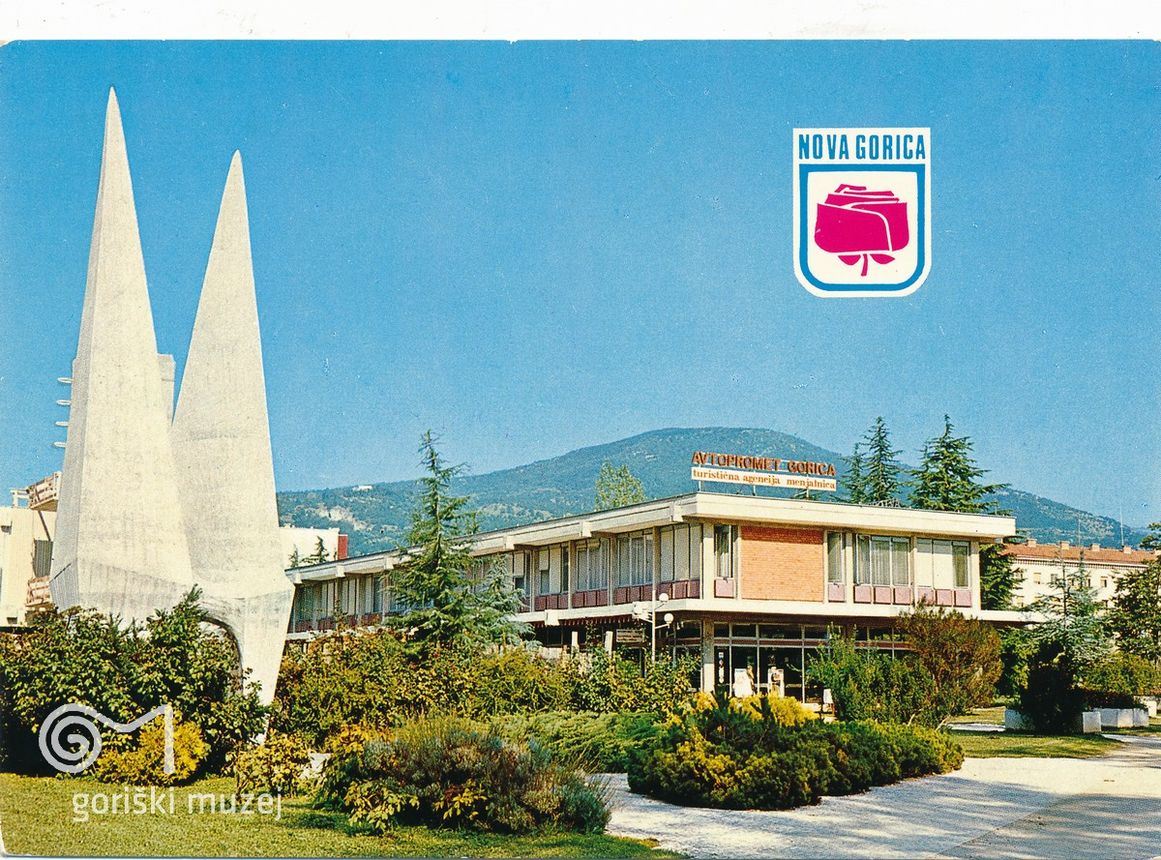
Postcard of the centre of Nova Gorica in the late 1960s featuring the Ikarus monument. ©held by the Goriški muzej Kromberk – Nova Gorica
1 / 7
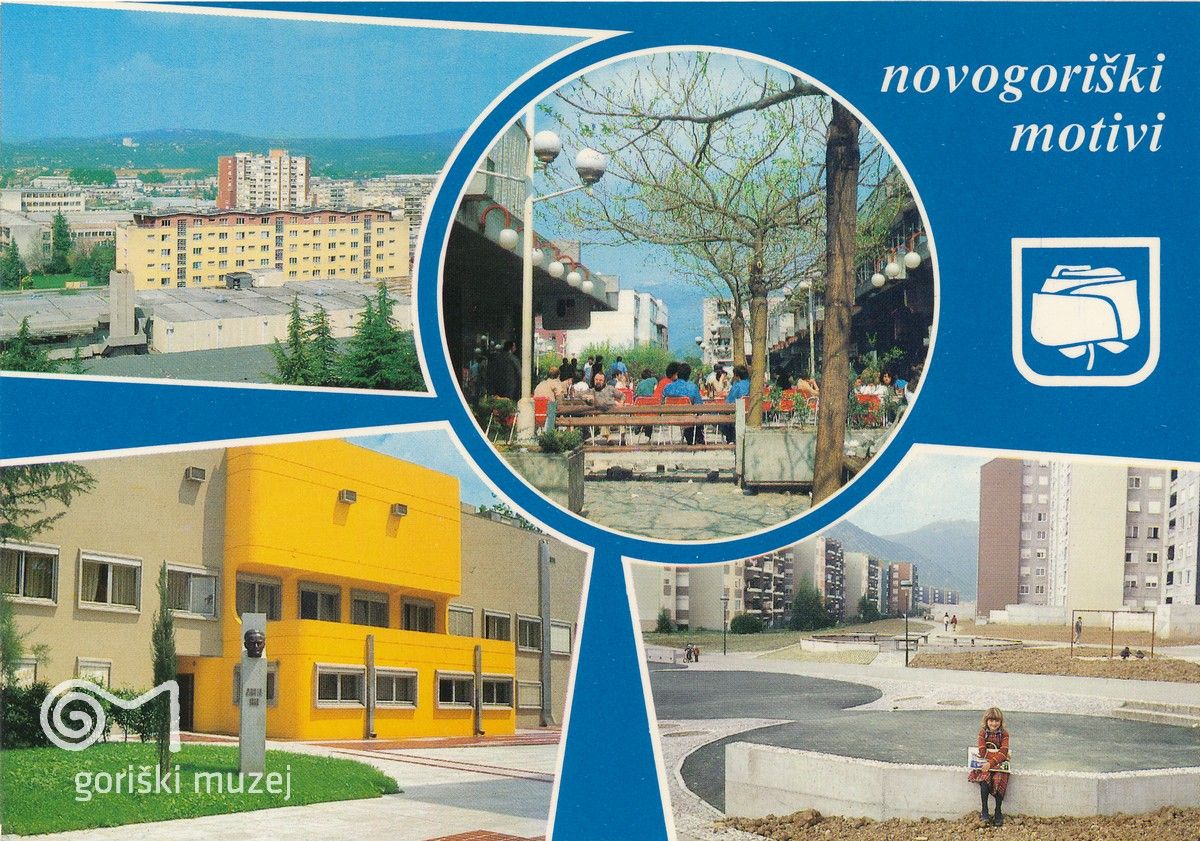
Postcard ©Goriški muzej archive
2 / 7
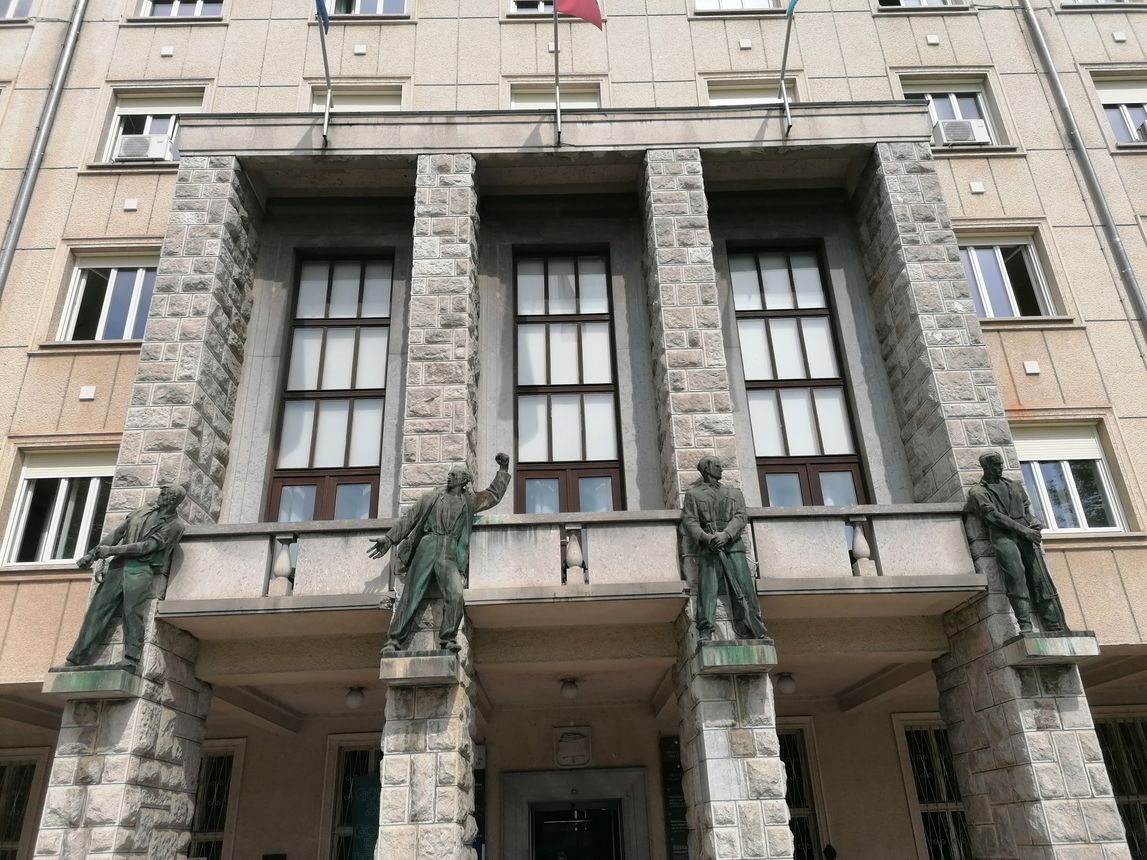
The facade of Nova Gorica Municipality. Sculptor: Boris Kalin. ©Photo: Blaž Kosovel
3 / 7
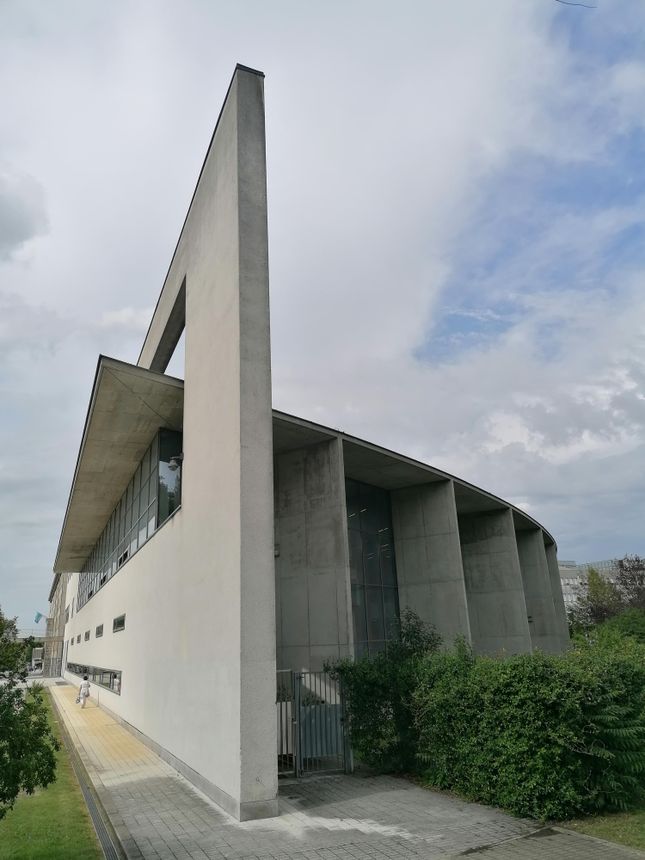
©Photo: Blaž Kosovel
4 / 7
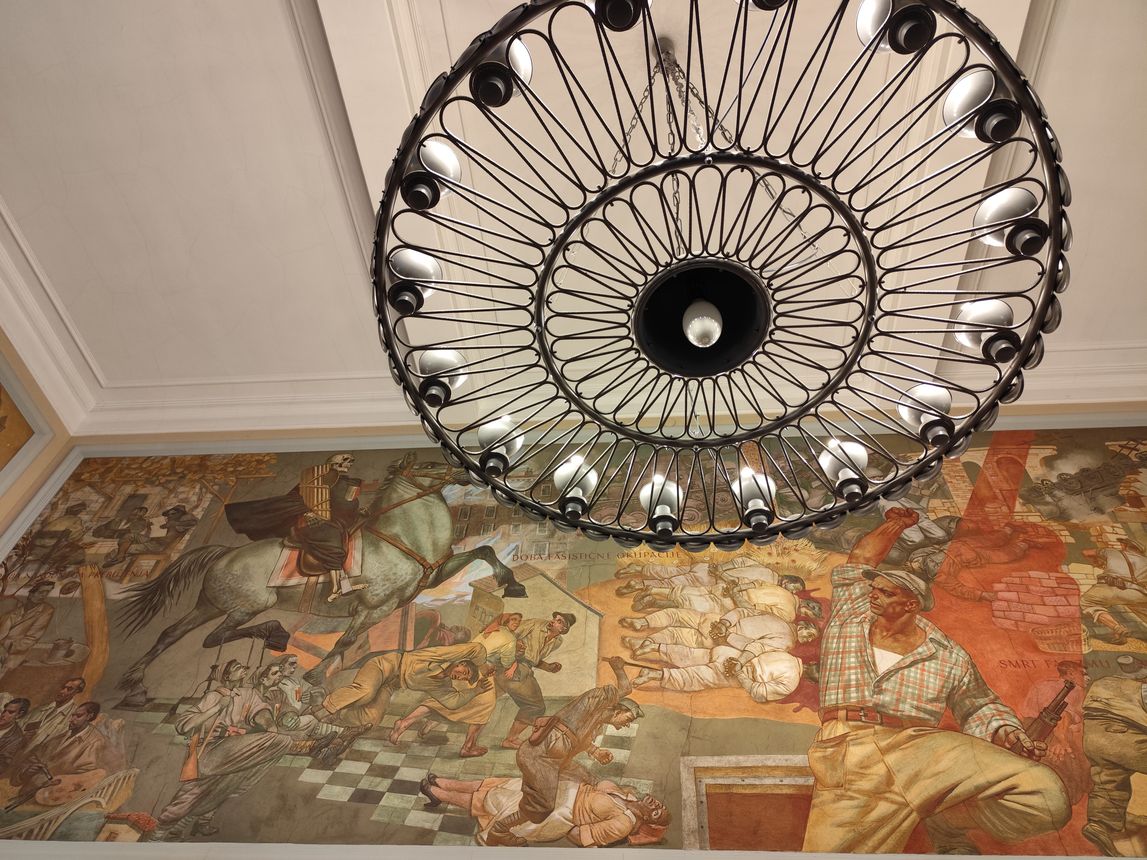
A fresco by the painter Tomaž Pengov in the municipal building portraying the evil of fascism and the struggle against it. ©Photo: Blaž Kosovel
5 / 7
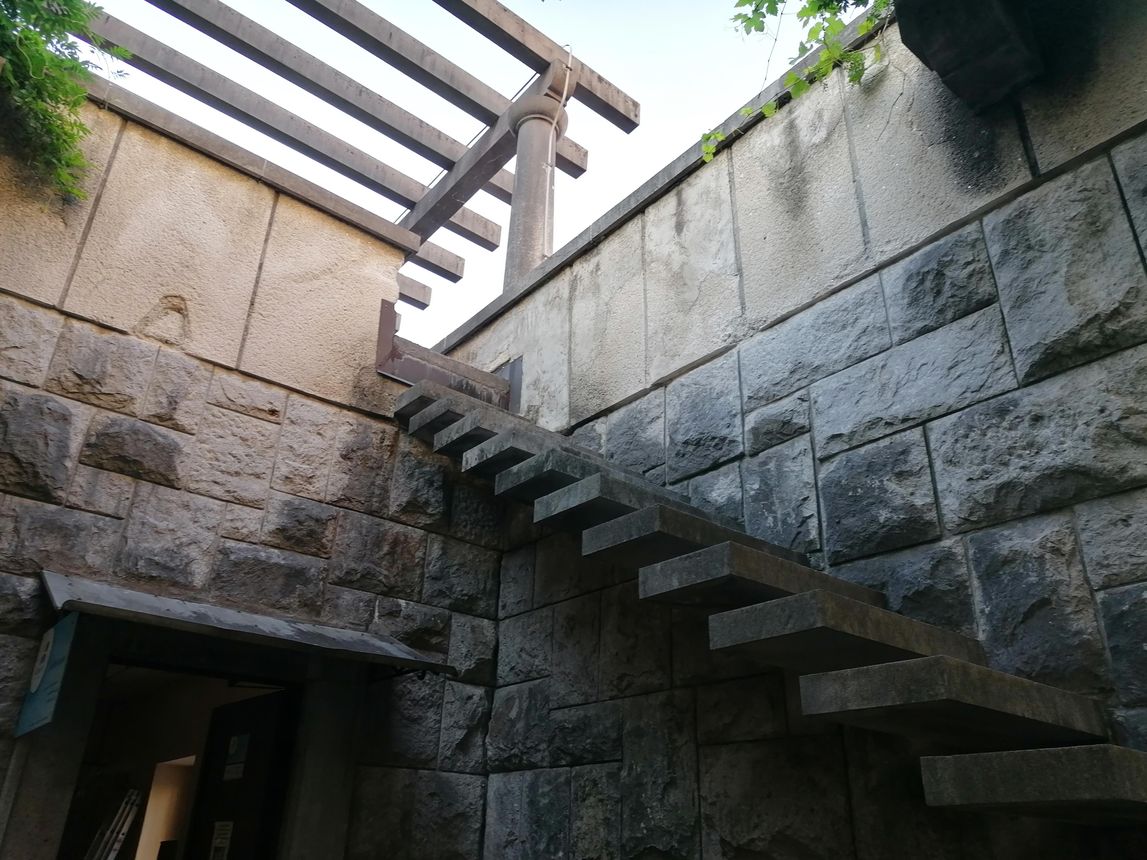
Stairs in the municipality atrium. ©Photo: Blaž Kosovel
6 / 7
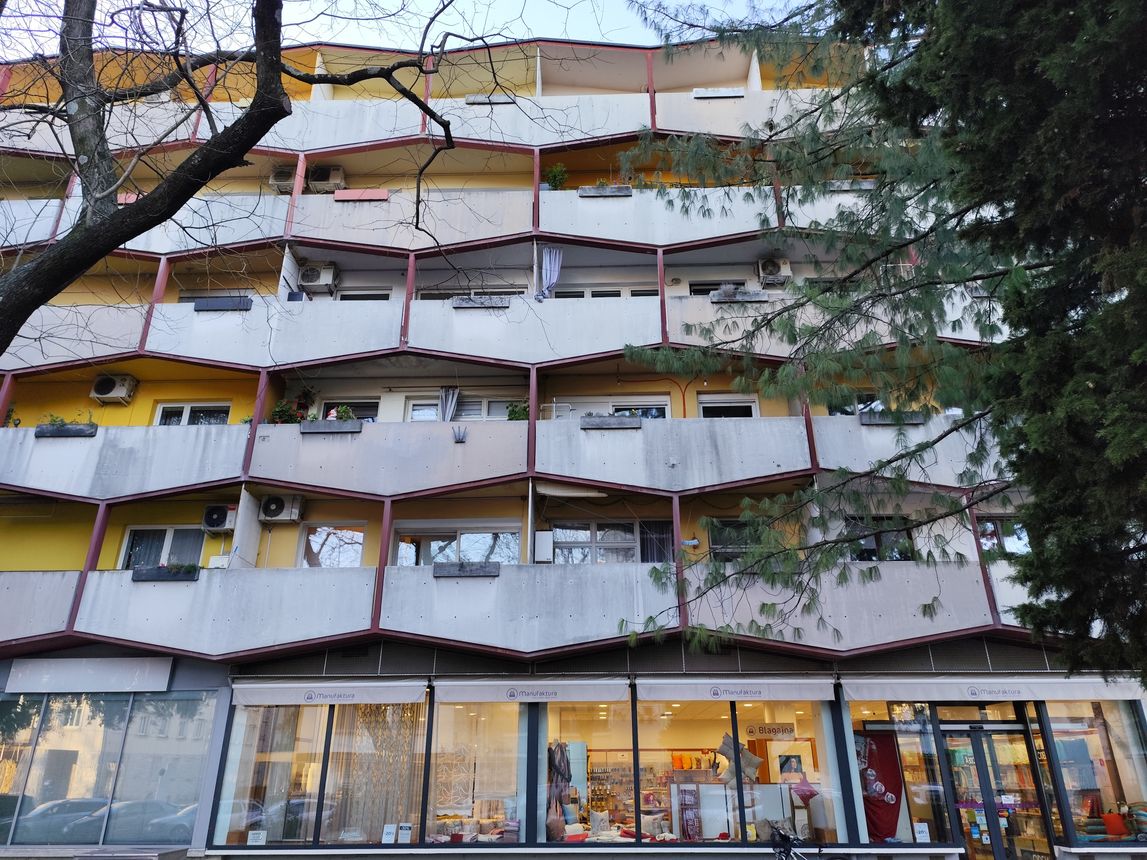
Residential building "beehive" ©Photo: Blaž Kosovel
7 / 7
It was 15 September 1947 when the new state border cut through the centuries-old, unified Gorizia region. The border divided families, fields, houses, farm buildings, courtyards and streets. In the village of Miren, it even split the local cemetery in two, separating it between two states.
The state border became a heavily guarded new reality. As a large part of the region was left without its thousand-year administrative, cultural and economic centre, a new one had to be provided. The role of this new centre could have been assumed by one of the nearby settlements — Solkan, Šempeter, or even Ajdovščina. Yet instead of expanding an existing town, the authorities in Belgrade decided to build an entirely new city. They sought to turn defeat into victory: instead of the lost Gorizia, they would construct a completely “new” Gorica.
They were determined to build something grand, beautiful and proud — something that would shine across the border. The new socialist Yugoslavia embarked on an ideological and propagandistic project: the construction of a city as a socialist showcase facing the West. It was the first newly planned city in the new Yugoslavia. Unlike many other post-war new towns, Nova Gorica was not designed solely to serve a specific industry (as, for example, Velenje was), but as a fully fledged administrative, educational and cultural centre. Within five years, the new city was expected to be home to 10,000 inhabitants.
Yet only two weeks after the foundation stone had been laid, a shock followed. In 1948, the Soviet Union expelled Yugoslavia from the Eastern Bloc through the Informbiro Resolution, punishing Tito for his excessive independence and popularity. The Iron Curtain shifted to the eastern borders of the country, and new allies had to be sought in the West. With this, the ideological need for a city that would shine across the border disappeared — and so did the financial support from the capital. The development of the city soon fell upon the shoulders of the local authorities, who did not share the initial enthusiasm for such an oversized urban plan.
The original master plan was quickly abandoned and replaced by several new ones. With limited financial resources, the city was gradually adapted to local wishes and needs, including by reducing the size of buildings and the distances between them. In this way, Nova Gorica moved closer to the idea of a “city at a human scale” and avoided many of the problems that have affected similar cities built according to strict modernist principles.
The identity of Nova Gorica has always been a particular challenge. By the very definition of its origin, it is a city of newcomers — people who moved there in search of new opportunities: first from the surrounding hills, then from other urban centres, and, due to the high demand for labour, also from other Yugoslav republics.
A PECULIAR NEW TOWN
Among the many new towns built after the Second World War, Nova Gorica stands out primarily because from the very beginning it was planned as a fully-fledged new administrative, educational, and cultural centre. New centres of this kind are usually large state projects aimed at building new capitals. The most prominent example of such modernist urbanism is Brasília, the capital of Brazil, built in 1956 in the interior of the country (architects Lúcio Costa, Oscar Niemeyer, and Joaquim Cardozo). Another important example is Chandigarh, the largest urban planning project of Le Corbusier, built in 1953 as the capital of the Indian states of Punjab and Haryana.
Nova Gorica, however, has two additional particularities. It was built as a replacement for a “lost” city – the “old” Gorizia after the Second World War. At the same time, it is also a city in which the original urban concept was abandoned relatively quickly due to geopolitical changes following the Informbiro Resolution and the resulting shortage of financial resources during the Yugoslav period.
Avtor: Blaž Kosovel
Kraj: Nova Gorica

Povezani članki
How and why the planning of Nova Gorica began